
Attention parents, the June school holidays are almost upon us! Here’s your field guide to keep your entire family active, engaged, and off their devices.
Commanders (aka parents of Singapore), the June holidays are almost here. It’s time to put together your battle plan to manage your kids, especially if you aren’t planning to go overseas.
Your primary target: Keep your high-energy kids engaged, active, and more importantly, away from their digital devices.
Your secondary target: Keep your sanity completely intact until school reopens.
If you’re still thinking about what to do, worry not. We’ve got just the tactical plan for you to combat your kids’ energy: use HomeTeamNS’s clubhouses as your ops bases. In support of National Family Festival (NFF) 2026 led by Families for Life (FFL), HomeTeamNS clubhouses are buzzing with fun family-oriented activities—perfect for building a solid strategy to entertain you and your family.
So grab your clipboard, brief your kids, and let’s run through your mission objectives.
MISSION OBJECTIVE 1: REEL IN FAMILY MOMENTS
Status: Family-Approved Viewing
No commander should have to fight the holiday boredom battle alone, especially when backup comes with some yummy popcorn.
HomeTeamNS Family Day 2026

For this mission, gather your entire unit for a well-earned pause from the action. Family Day 2026—HomeTeamNS’ signature, members-only event—returns with a quest: rally the family for a special screening of a highly-anticipated animation movie at a subsidised rate, complete with a whole lineup of activities, exclusive movie merchandise, goodies, attractive prizes, and more. It’s a chance for intergenerational bonding, where parents and kids, and even grandparents, can come together, laugh, and share in a classic story that ignites conversations that go beyond the screen.
When: 20 June 2026 (Saturday)
Time: 10.30am to 7pm
Where: Golden Village Cineleisure
Pricing: Tickets start from $18.75 per pax
To better support the family ecosystem, HomeTeamNS has introduced a brand-new Grandchildren Membership Tier, making it easier than ever for grandparents to share in the clubhouse experiences and events with their grandchildren.
Everyone wins a slice of the pie: kids are spoiled by all the adults and their grandparents get to bond with them.
Check out the details of the new Family Membership tier here.
MISSION OBJECTIVE 2: BURN OFF EXTRA ENERGY
Status: Important
Your little ones have boundless energy. When it doesn’t have an outlet, it can spill over into the house in less‑than‑ideal ways.
A few fun, high‑energy activities can make a big difference.
SkillFest

This one’s applicable if your troops are between 8 and 12 years old. Start by signing them up for HomeTeamNS’ SkillFest, a three-day school holiday programme conducted at all HomeTeamNS clubhouses.
This full-day hands-on learning deployment will challenge junior participants to various structured activities across a range of clubhouse facilities. From outdoor missions and team challenges to immersive play, no two days are ever the same. Every moment is screen‑free, engaging, and truly unforgettable!
New skills and friends aside, they’ll also burn off their energy, giving you much-needed peace to yourself.
When: 10 to 12 June 2026
Time: Various timings
Where: HomeTeamNS Clubhouses (Bedok Reservoir, Khatib, and Bukit Batok)
Pricing: Passes start from $100
MISSION OBJECTIVE 3: EXECUTE AQUATIC MANOEUVRES
Status: Highly Recommended
Singapore’s recent heatwave doesn’t look like it’s letting up any time soon, and it will definitely pose a tactical disadvantage to you and your little troops. Before tempers flare and the troops start getting sweaty and cranky, pivot your strategy to some water-based fun, perfect for the entire family.
Dip 'N Splash at Bedok Reservoir

Returning for its fourth edition with an exciting, refreshed concept, Dip ‘N Splash is your ultimate cool-down protocol. Navigate the Floating Water Obstacle Course, a floating challenge of climbing, balancing, and sliding across the water.
If your kid prefers something calmer and more scenic, check out Aqua Sports for a beginner-friendly guided kayaking experience at Bedok Reservoir. For the ultimate water-filled wind-down, head to Aqua Adventure for some splash-filled fun.
When: 6 and 7 June 2026 (Saturday and Sunday)
Time: 10am to 7pm
Where: HomeTeamNS Bedok Reservoir
Pricing: Passes start from $12
Other happenings at HomeTeamNS Bedok Reservoir in June: Dad-And-Me Gymnastics Try-Outs, Four Star Mattress Sale, The Big Game, Family Fun Festival Toy Fair, and Jean Perry Mid-Year Sale.
MISSION OBJECTIVE 4: REINFORCE FAMILY PLAYTIME
Status: Essential
A wise man once said, “The family that plays together, stays together.” …or something along these lines. The point is, it is crucial for you and your little troops to log meaningful shared experiences together to strengthen your bonds as a family.
Playland at Khatib

For those who prefer to stay dry while enjoying some indoor fun, head over to HomeTeamNS Khatib for Playland. Playland 2026 features a series of activities centered on learning through play, including mega bouncy castles, carnival games, fringe activities, stage entertainment, and more!
To sweeten the deal, there are also ice cream redemptions, food and snacks stations, mascot performances, a T-Play craft zone, and a movie screening to further amuse and entertain the kids. All activities and redemptions are subjected to availability and while stocks last.
When: 14 June 2026 (Sunday)
Time: 10am to 7pm
Where: HomeTeamNS Khatib, Level 2 Grand Ballroom
Pricing: Tickets start at $10 per child
Other happenings at HomeTeamNS Khatib in June: Toy Fiesta with Robocar Poli Meet & Greet, Link Sports Sale, and The Big Game.
MISSION OBJECTIVE 5: CRAFT THE GLOW EXPERIENCE
Status: Artist’s Pick
Even the best units need time off the field. Meaningful family moments don’t just happen, they’re created through shared play and discovery. In this case? A little extra glow doesn’t hurt.
Glow Play Carnival at Bukit Batok
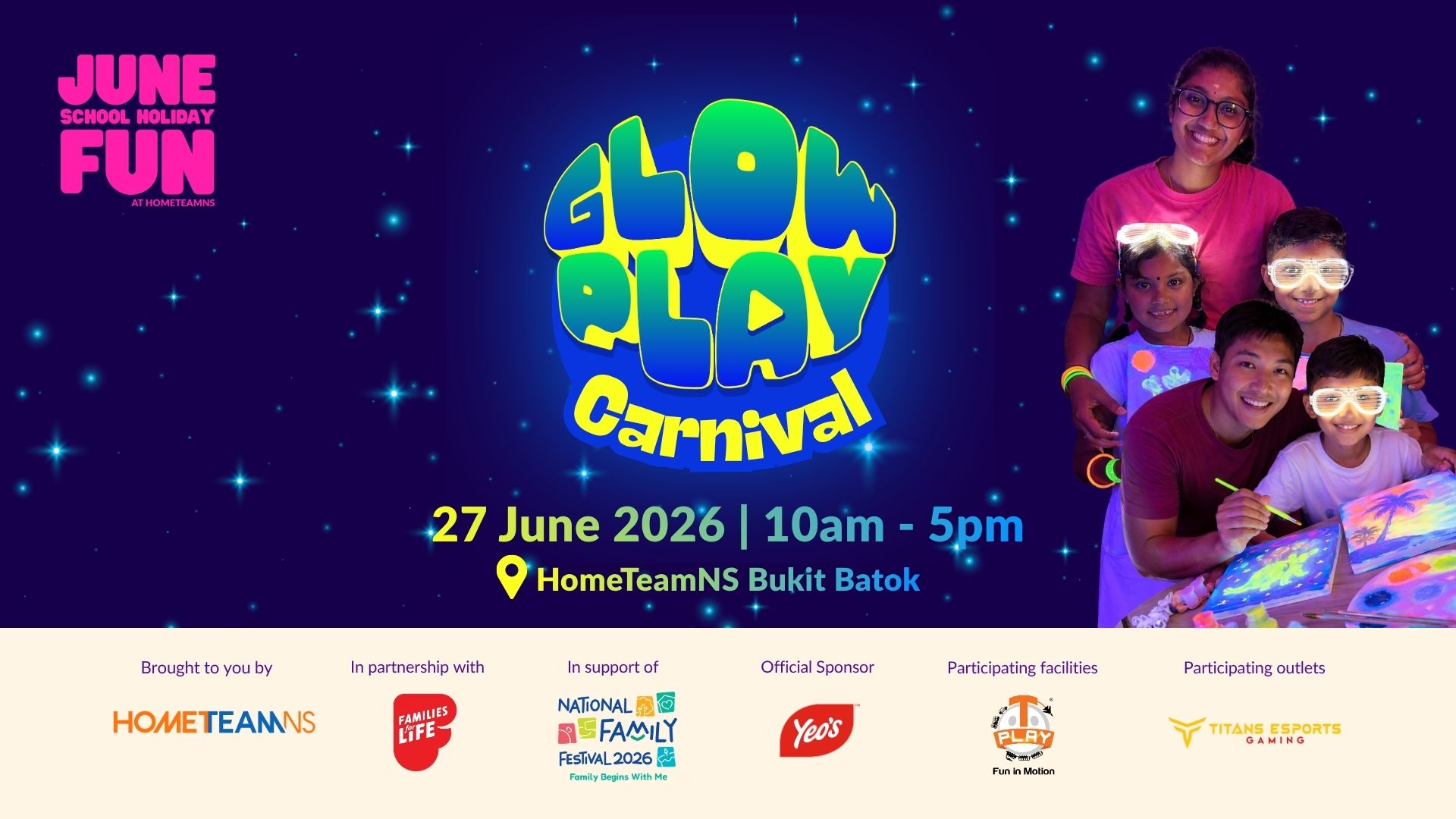
For a more relaxed, carnival-style deployment, check out Glow Play Carnival at HomeTeamNS Bukit Batok. It is all about expressing your little troops’ creative spirit, including a unique glow-in-the-dark painting experience and light-play elements such as a bouncy castle, carnival games, and face and body painting. All in all, you get a low-stress, high-reward environment designed to foster smiles all around.
When: 27 June 2026 (Saturday)
Time: 10am to 5pm
Where: HomeTeamNS Bukit Batok
Pricing: Passes start at $8 per child
Other happenings at HomeTeamNS Bukit Batok in June: T-Play Championship Cup, The Big Game, and Family Fun Festival Toy Fair.
MISSION OBJECTIVE 6: CREATE FAMILY MOMENTS ANYWHERE, ANYTIME
Status: Vital
Family bonding does not only happen during planned moments. It begins with YOU.
No grand gestures are needed. Sometimes, all it takes is showing up, being present, and making time together matter.
National Family Festival 2026

Now in its fifth edition, the National Family Festival celebrates the vital role families have played in shaping Singapore’s growth over the past six decades. Anchored by this year’s message, “Family Begins With Me,” the initiative brings families together through a nationwide lineup of events, while empowering each individual to take the lead in strengthening family bonds and become a catalyst for positive change within their own family unit. From vibrant carnivals and interactive activities to hands-on workshops and special promotions, families of all kinds can look forward to meaningful experiences designed to create lasting moments together.
When: 30 May to 28 June 2026
Time: Various timings
Where: Various venues
Pricing: Free
DEBRIEF AND FINAL INSTRUCTIONS
The June school holidays don’t have to be a gruelling test of endurance. With the right intel and solid bases of operations at HomeTeamNS’ clubhouses, you’re guaranteed a successful holiday campaign filled with laughter, growth, and strengthened family bonds.
Remember the National Family Festival directive: Family begins with you. After all, this nationwide campaign is designed to reinforce the vision of a “Singapore Made for Families,” empowering you to create quality, unforgettable moments with your loved ones.
So, commanders, your orders are clear. Structure your schedule, secure your bookings, and prepare for the holidays ahead.
Ready to execute? Check out the full list of June holiday activities and secure your slots here!
MORE PERKS WITH EVERY STAY THIS JUNE
Make every booking go further this June. Book a stay at East Villa or ManCave at Khatib or Bedok Reservoir, and unlock 3 exclusive 1-for-1 vouchers across selected facilities. More ways to play, more to explore, and more moments to enjoy together across HomeTeamNS!



Like our stories? Subscribe to our Frontline Digital newsletters now! Simply download the HomeTeamNS Mobile App and update your communication preference to ‘Receive Digital Frontline Magazine’, through the App Settings.