Home › In The Force › How These NSFs Fast-Track Their Careers Before They ORD
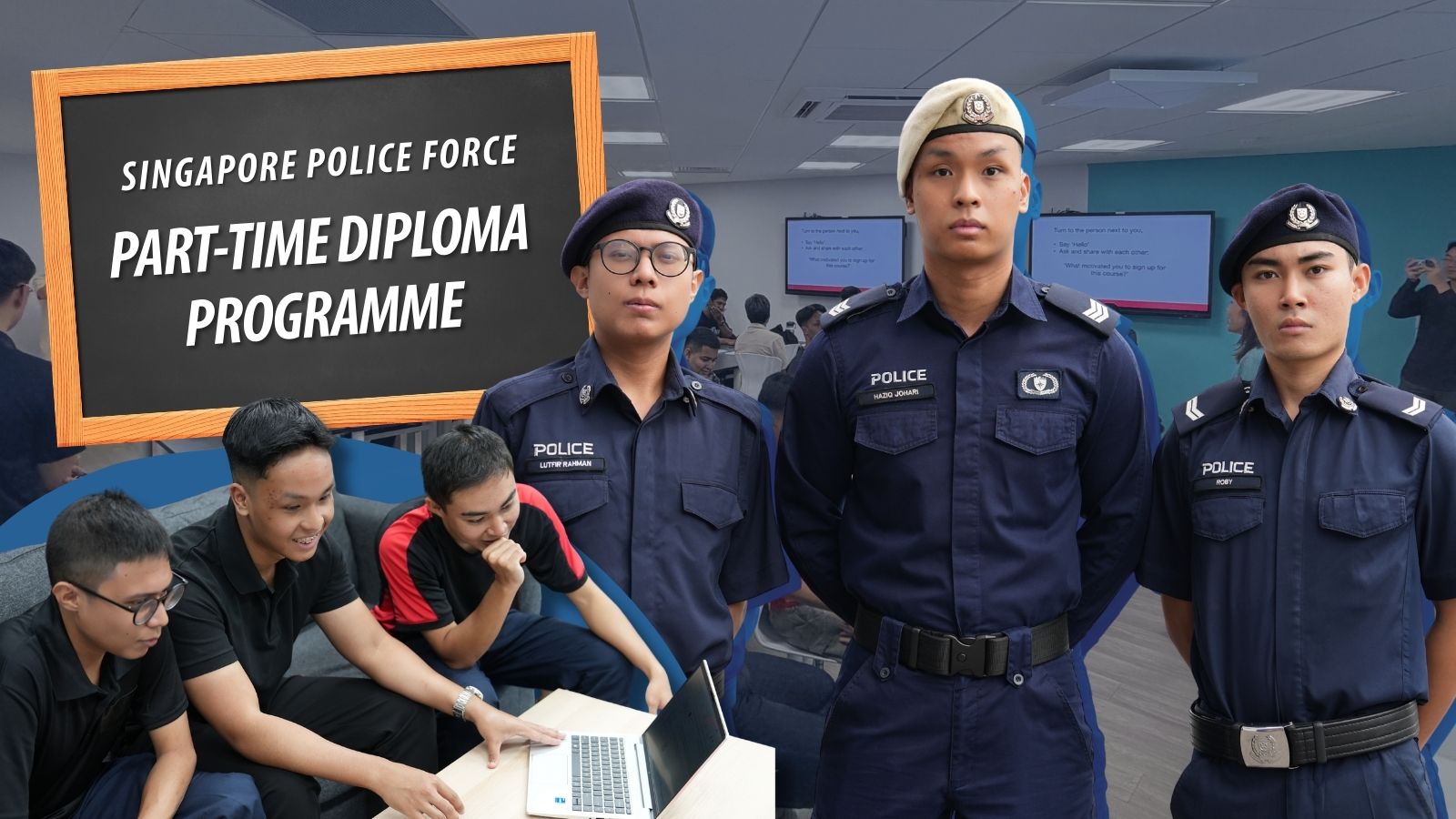
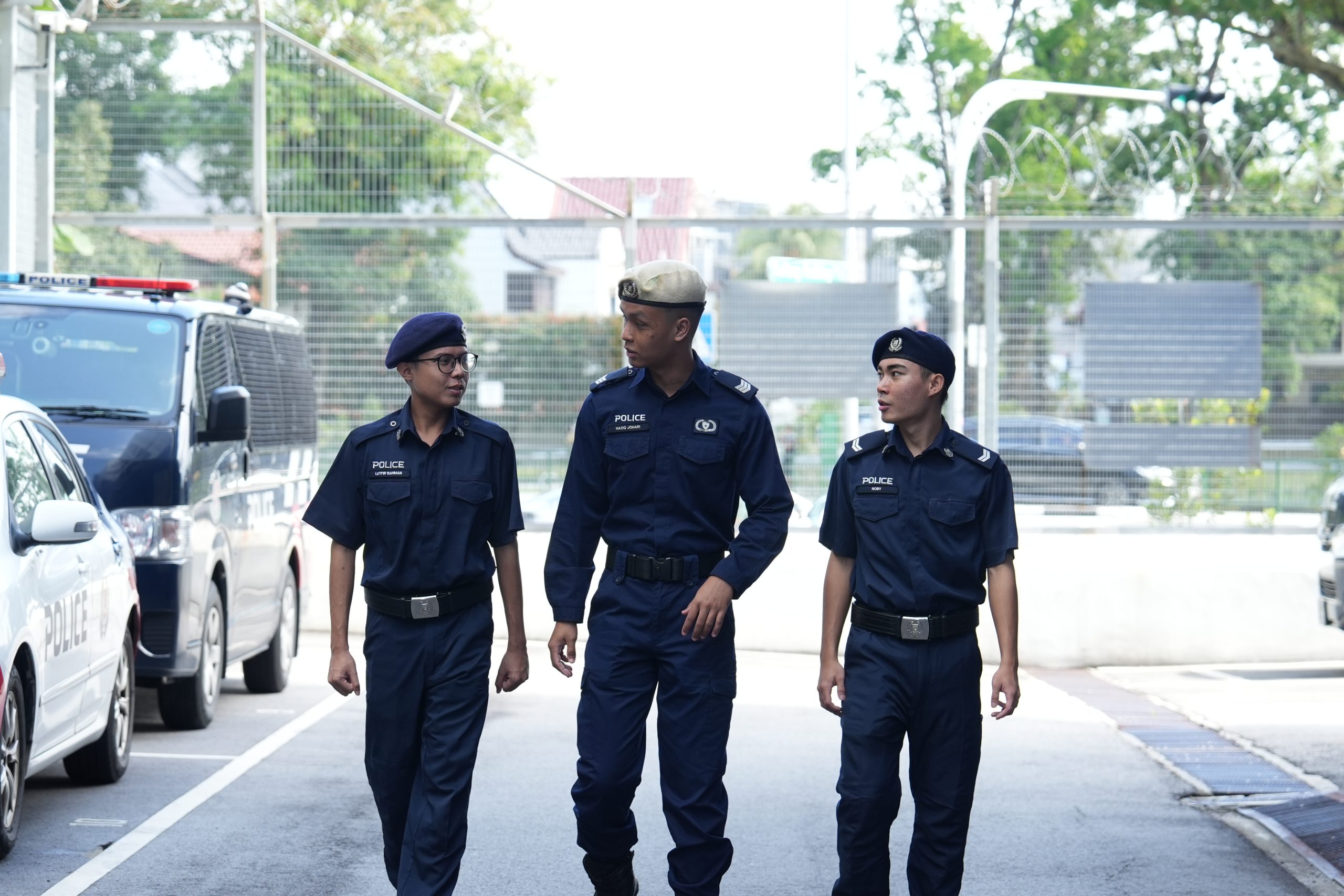
Through the new SPF Part-Time Diploma Programme, NSFs like SC/CPL Roby, SC/SGT (2) Abdul Haziq Bin Johari, and SC (2) Lutfir Rahman Bin Zakaria are proving that it’s possible to serve, study, and stay ahead.
For many full-time national servicemen (NSFs), the start of National Service often comes with a concern: “Will I lose momentum in my studies or career?” In a knowledge-based economy that favours constant upskilling to stay employable, it’s understandable to worry about staying competitive during a two-year commitment.
Take it from Singapore Police Force (SPF) Training Command (TRACOM) Assistant Trainer SC/CPL Roby, whose personal experience with the pressure is compounded by age and financial responsibility. Before enlisting, he juggled two jobs to support his family, an arrangement that had already put his education on hold.
“When I entered National Service (NS), I was one of the oldest members in my squad,” Roby recalled. “Many of my peers were younger and had higher academic qualifications. As a result, I felt insecure about my academic standing.”
Similarly, SC/SGT (2) Abdul Haziq Bin Johari, a Protective Security Command (ProCom) Trooper, faced the same credential gap. Although he held a private diploma in Sports Science, he was acutely aware that some local universities may not recognise it. “I was concerned that my academic progression may limit my future options. I didn’t want those two years to feel like a pause,” Haziq shared.
As for SC (2) Lutfir Rahman Bin Zakaria, a D Division Staff Assistant, his personal choice to go down a longer academic route meant he took a different timeline from many of his peers. Enlisting with the SPF inevitably lengthened the gap, prompting him to find a way to continue his studies during NS.
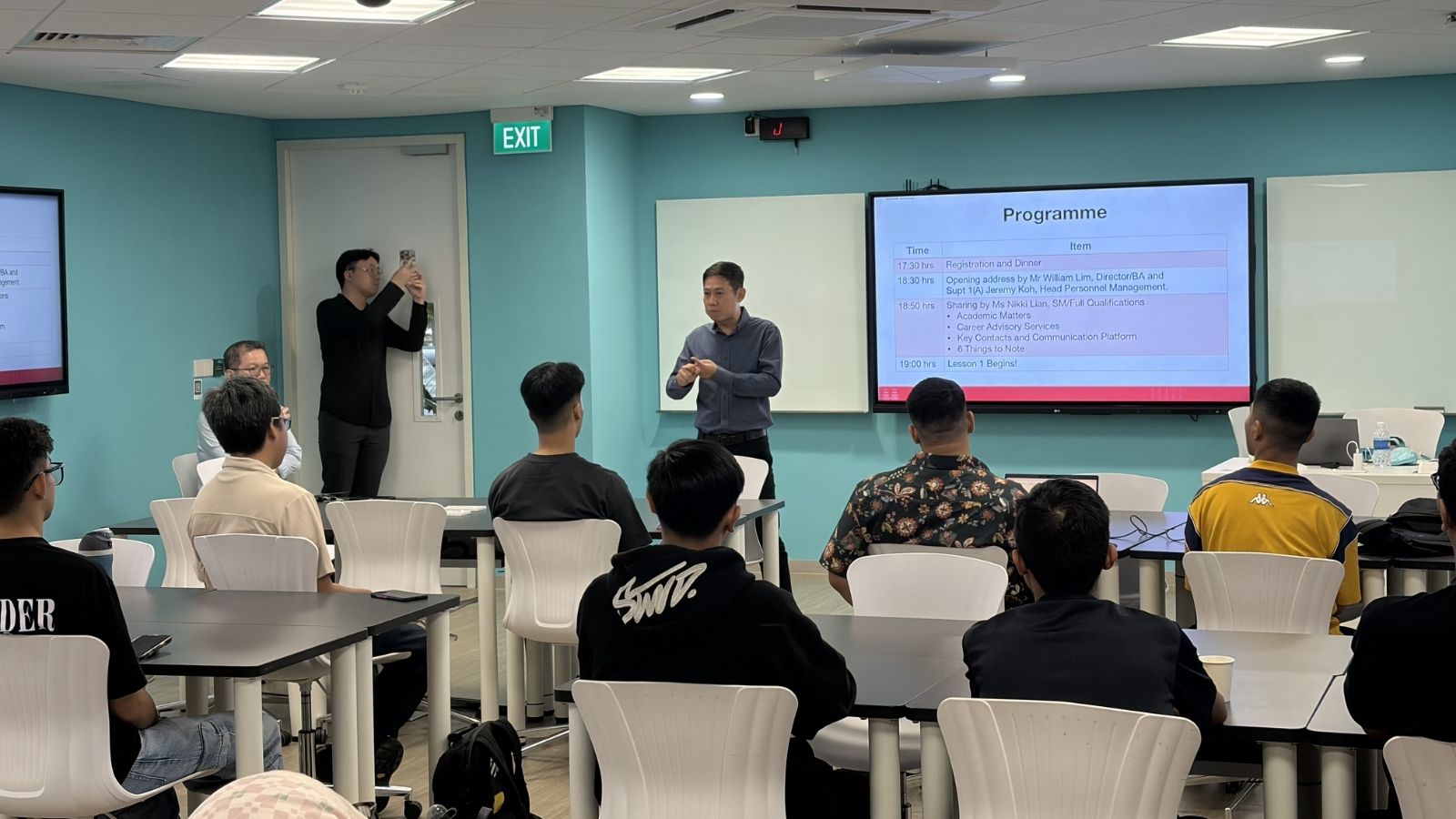
This is where the Part-Time Diploma in Business Practice (Administration and Management) comes in as the solution. A collaborative effort between the SPF and Ngee Ann Polytechnic (NP), this diploma rewrites the NS narrative into an accelerated growth period. It empowers NSFs with critical employable skills that enable them to seamlessly reintegrate with the working world after they ORD.
As Lutfir shared, the diploma allowed him to complete his NS and resume his studies simultaneously. “I actually wanted to complete my NS before returning to my studies,” Lutfir explained. “But with the support from my supervisor [to pursue the diploma], I decided to try and go for it.”
The diploma is designed for NSFs too: instead of the usual gamut of written examinations, the diploma features an assessment-based curriculum where students learn through application rather than high-pressure cramming sessions.
This format was a game-changer for Roby. As a Field Instructor, he managed stadium operations in two to four-hour tranches, with small pockets of time in between. “The assessment-based format allowed me to use [my] breaks effectively to work on my assignments,” Roby said.
For Haziq, the diploma’s structure gave him the breathing room to navigate the unpredictability of police work. “Instead of cramming for exams, I could steadily work on assignments and apply concepts progressively, which made studying more manageable during NS,” he noted.
Crucially, the diploma is compressed to a period of just 18 months, a far cry from the standard 30 months for similar part-time schemes. This presented a very real possibility for servicemen like Roby to complete their studies in a reasonable timeframe.
“The reduced 18-month duration motivated me. It meant that after ORD, I would only need another five to six months to complete the diploma,” Roby explained.
From left to right: SC/CPL Roby, SC (2) Lutfir Rahman Bin Zakaria, and SC/SGT (2) Abdul Haziq Bin Johari are part of the first batch of the SPF Part-Time Diploma Programme.
Personal endeavours aside, the diploma is also designed to synergise with the SPF’s operations. Its curriculum teaches NSFs to cross-apply business theories and principles to their police work.
Haziq, for one, found the organisational behaviour modules especially useful for improving his operational efficacy. “Being aware of how stress affects behaviour taught me to communicate more clearly and remain calm when coordinating with my teammates,” he observed. This newfound self-awareness reduced misunderstandings and improved overall team efficiency in high-tension situations.
As for Roby, his lessons in entrepreneurial problem-solving reframed his approach to unexpected situations as a Field Instructor. Through his lessons, he learned to deploy a calm yet swift approach to tackle injuries and coordinate training safety measures.
The diploma also imparts operational discipline and critical thinking to students — skills that have shaped the drive and focus Lutfir brings to his role as a police NSF.
With this diploma, Roby, Haziq, and Lutfir will ORD and re-enter the civilian workforce with a double-threat profile: practical, disciplined police experience combined with a formal business qualification. This initiative levels the playing field, closing the gap between Nitec or Higher Nitec holders and Junior College (JC) or Polytechnic graduates.
As Roby affirmed, “I feel more job-ready. Aside from my prior experience working two jobs, NS has strengthened my discipline, teamwork, and ability to handle responsibility. And now, combined with the diploma programme, I’m better prepared to adapt to workplace demands and professional expectations in the workforce.”
Haziq shares Roby’s sentiment, noting that the diploma equipped him with communication, teamwork, leadership, and problem-solving skills. “I also have a better understanding of organisational structures and workplace expectations, making me more prepared for the workforce,” Haziq quipped.
Ultimately, the Diploma in Business Practice (Administration and Management) affirms the idea that NS and personal advancement can go hand in hand. This synergy serves as the opening chapter for NS’s transformation into a career launchpad.
For new enlistees worried about their future, the advice from these three pioneers is clear.
“See NS as an opportunity rather than a setback,” Haziq advised. “Take advantage of programmes [like the diploma] that allow you to upskill during service.”
Lutfir concurs with Haziq but encourages a more decisive approach: “Don’t be worried. Take the first step to try new things. You’ll never know how things will work out unless you try.”
Roby rounds things up with an encouraging rally for new enlistees to maintain a positive mindset towards NS. “Serving in the SPF equips us with valuable skills and core values such as courage, loyalty, integrity, and fairness, which are highly relevant in today’s job market,” he asserted.
If you’re currently an NSF with SPF and are interested in the diploma, keep your eyes peeled for the next intake. You don’t have to worry about cost, too: course fees are heavily subsidised, and you can even draw on your Post-Secondary Education Account (PSEA) to fund the programme!
Like our stories? Subscribe to our Frontline Digital newsletters now! Simply download the HomeTeamNS Mobile App and update your communication preference to ‘Receive Digital Frontline Magazine’, through the App Settings.